Vertical Specialization Drives 3X Higher Conversions
.png&w=3840&q=75)
Related In-Depth Guides

4 Surprising Reasons Fashion Brands Are Ditching Websites for Mobile Apps
Introduction: The Hidden Logic Behind "Download Our App"If you’ve ever shopped for clothes online, you know the cycle. You find the perfect item, add it to your cart, and then hesitate. Will it actually fit? Will the color look the same in person? This uncertainty often leads to buying multiple sizes—a practice known as "bracketing"—with the full intention of returning whatever doesn't work. On the other end of the spectrum is the chaos of a limited-edition "drop," where a coveted item sells out in seconds, often leaving you with nothing but a crashed website and a sense of frustration.Faced with these scenarios, you've undoubtedly seen the persistent banner: "For a better experience, download our app." It’s easy to dismiss this as just another marketing push, a brand's attempt to secure a permanent spot on your home screen. But this prompt is far more than an advertisement; it's a strategic response to the brutal new economics of e-commerce, where razor-thin margins and the high cost of returns are forcing brands to rethink everything.This article pulls back the curtain to reveal the hidden logic behind the industry's pivot to mobile. Here are four surprising, behind-the-scenes reasons why native mobile apps are becoming the new flagship stores for modern fashion brands.1. They're Building a Virtual Dressing Room to End the GuessworkThe fashion industry has a costly secret: online apparel return rates hover between a staggering 30% and 40%. This is a massive drain on profitability, especially when compared to the 8-10% return rate for brick-and-mortar stores. The core of the problem is the "verification gap"—the chasm between the digital representation of a garment and its physical reality. Fit issues alone are responsible for 38% of all returns.Native mobile apps offer a powerful solution by transforming your phone into a virtual dressing room. By leveraging a phone’s advanced hardware, like its GPU and LiDAR sensors, brands can deliver high-fidelity Augmented Reality (AR) and Virtual Try-On (VTO) experiences. This technology allows you to see how a garment drapes and scales on your own body in real time, delivering experiences that are simply not possible on the mobile web, which often suffers from the latency and poor tracking stability of browser-based AR.The impact is dramatic. Retailers who implement high-fidelity AR have seen their return rates decrease by up to 40%. This technology directly addresses the concerns of the nearly 47% of consumers who dislike online shopping precisely because they can't physically examine products. It moves the experience from a game of expensive guesswork to one of confident, informed purchasing.2. They're Engineering a ‘Velvet Rope’ for Hyped Product DropsYou've probably heard of "Drop Culture," the marketing phenomenon where brands release limited-quantity products at a specific time to generate immense demand. This strategy, sometimes called the "SNKRS Effect," can sell out an entire product line in minutes. But for every successful drop, there are countless technical failures. The sudden, massive influx of users—a "thundering herd" traffic pattern—overwhelms standard e-commerce websites and shared app platforms. These platforms are architected for steady traffic, not the vertical spikes of a drop, leading to API throttling and database locks that cause crashes.Custom native apps provide an elegant solution to this chaos: the Virtual Waiting Room. Think of it as a digital "velvet rope." Instead of showing users a crash screen when traffic surges, the app places them in an orderly, branded queue. It provides feedback like your position in line and estimated wait time, turning a potential technical disaster into a fair, organized, and even exclusive-feeling event."A crashed app during a hype event can alienate a brand's most loyal superfans, damaging the very brand equity the drop was meant to build."Furthermore, native apps offer superior bot mitigation. Using device-level verification, they can ensure that limited-edition products go to real fans, not to automated reseller scripts that plague web-based drops.3. They're Turning a 10-Minute Checkout into a 1-Second TapThe final hurdle in any online purchase is the checkout, and on the mobile web, it acts as a friction multiplier that kills the very impulse to buy. The average cart abandonment rate for fashion on mobile devices is an astonishing 84.6%. The reasons are frustratingly familiar: 26% of users drop off due to a long or complex checkout process, and another 34% leave when forced to create an account.Native apps solve this by fundamentally changing the interaction from tedious "data entry" to simple "identity verification." While a mobile website forces you to manually type in your name, address, and credit card details, a native app can seamlessly integrate with digital wallets like Apple Pay. This creates an "Instant Checkout" experience powered by biometric authentication like FaceID or TouchID.The results are profound. Brands that integrate these features see conversion rate increases of up to 58%. By reducing the entire payment process to a single, secure tap, apps are perfectly designed to capture the impulse-driven purchases that define so much of modern fashion commerce.Beyond the transaction itself, apps provide an "always-on" state. Unlike mobile websites that rely on temporary cookies and force users to log in repeatedly, a native app keeps the customer perpetually logged in, ensuring their cart and preferences are always just a tap away, perfectly capturing the micro-moments of impulse shopping.4. They're Not Just Selling Clothes; They're Building a CommunityIn today's competitive market, a single transaction is no longer the primary goal. Brands are focused on Customer Lifetime Value (LTV)—the total revenue a customer will generate over time. This is where apps deliver their most significant and lasting advantage.The financial argument is compelling. App users generate 2.8x to 5x higher lifetime value than web-only shoppers and purchase 33% more often. This happens because an app is an "owned channel." Once installed, the brand has secured permanent real estate on the user's home screen, allowing for direct communication that bypasses the need to constantly pay Google or Meta to re-acquire that user's attention.The primary tool for this is the push notification, which bypasses cluttered email inboxes with their ~20% open rates and commands immediate attention on a user's lock screen. With the ability to increase user retention rates by up to 190%, targeted alerts about new arrivals, sales, or back-in-stock items are incredibly effective. Beyond notifications, brands are using apps to build communities through gamification and exclusive content—a strategy sometimes called the "Shein Effect." This drives deep engagement, reflected in the fact that users spend 7x more time in mobile apps than on mobile websites.--------------------------------------------------------------------------------Conclusion: Your Phone Isn't Just a Store, It's the New FlagshipA fashion brand's mobile app is far more than a miniature version of its website. It is a sophisticated, purpose-built tool designed to solve the biggest challenges in digital commerce. It's a virtual dressing room that slashes returns, a VIP entrance that manages hype, a one-tap checkout that eliminates friction, and a private club that builds lasting loyalty.In an industry where customer acquisition costs are soaring and returns can erase profits, these four strategies are not just about creating a better experience—they are about building a more resilient and profitable business model.The next time a brand prompts you to download its app, you'll know it's not just an invitation to shop. It's an invitation to a purpose-built world. The only question is, will you step inside?
The CAC Crisis: Why a Native App Is the Non-Negotiable LTV Engine for Beauty Brands
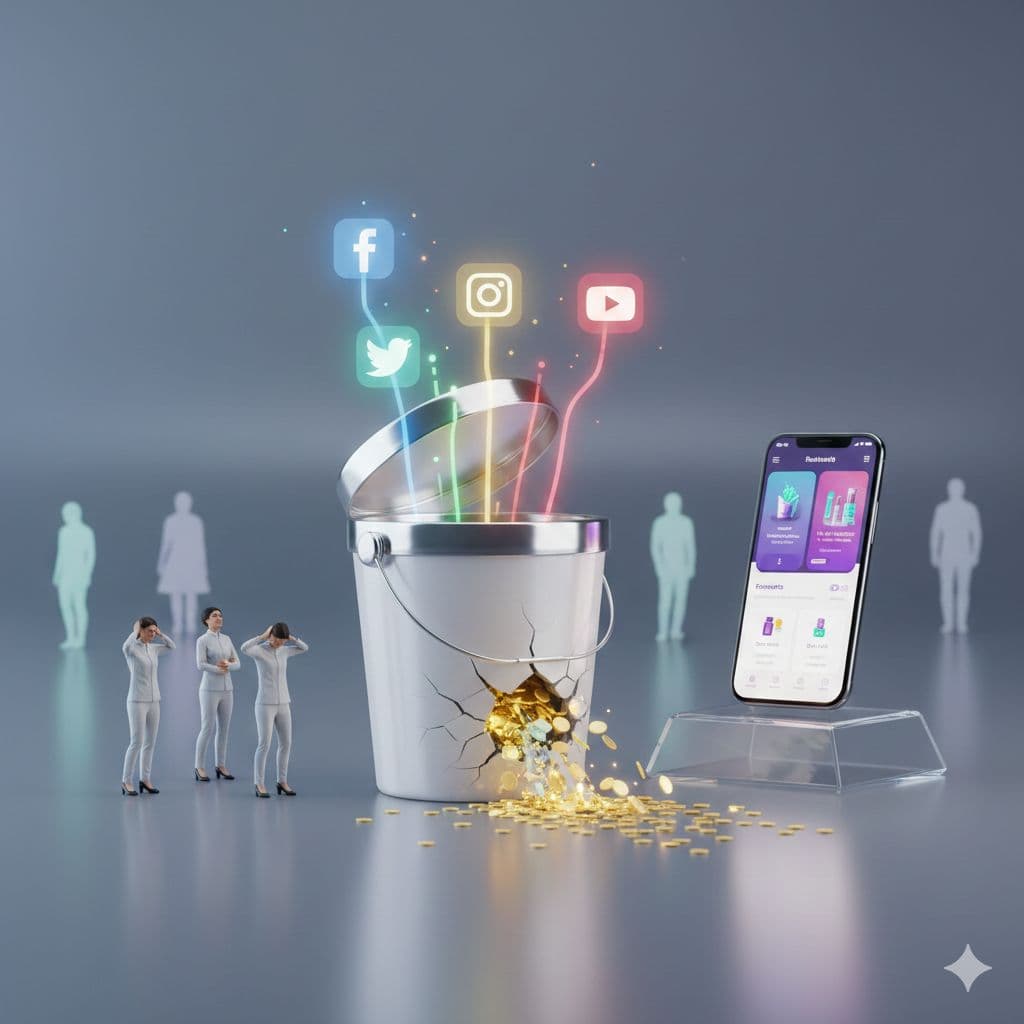
Introduction: The Leaky Bucket of Digital BeautyIf you run an e-commerce beauty brand, you're likely feeling the pressure. The old playbook—fueling growth with cheap, targeted social media ads—is broken. Customer Acquisition Costs (CAC) have soared, and privacy changes have made it harder than ever to reach the right audience. You're spending more to acquire each new customer, but they're leaving just as fast.This is the "leaky bucket" problem. Brands pour money into the top of the funnel, only to watch customers churn out the bottom after a single purchase. The solution isn't just better ad creative or a bigger budget. It's a fundamental shift in the customer relationship, and the most powerful tool for this transformation is found right on your customer's home screen: a native mobile app.1. The New Math: Your First Sale Is Now a Financial LossThe economic reality for direct-to-consumer beauty brands has become brutally simple. For the past decade, the DTC model was built on an arbitrage opportunity: buying attention cheaply on social platforms and converting it to profit. That arbitrage window has definitively closed. The cost to acquire a new customer through paid channels is now between $55 and $85. This single data point changes everything. When your Customer Acquisition Cost is higher than the Average Order Value (AOV) of a first purchase, your business model is mathematically insolvent on the first transaction.Profitability is no longer possible on the first sale; it is entirely dependent on securing a second, third, and fourth purchase. This deferral of profit exposes a critical vulnerability. The financial exposure is severe, as the source report bluntly illustrates:When a brand pays $70 to acquire a customer who buys a $50 cream and never returns, the brand has essentially paid $20 for the privilege of shipping product.This unforgiving math makes customer retention the single most important metric for survival. Your focus must shift from simply acquiring customers to engineering loyalty and maximizing Lifetime Value (LTV).2. Digital Real Estate: Your App Icon is a Subliminal BillboardThink about the prime real estate on your phone's home screen. A mobile app gives your brand a permanent, owned presence in your customer's most personal digital space. This is more than just a convenient link; it's a powerful psychological anchor.Behavioral economics calls this the "Endowment Effect"—we value something more highly simply because we "own" it. By downloading your app, a customer has psychologically endowed themselves with your brand. It becomes their beauty destination. This creates what can be called "Real Estate Dominance." With the average user unlocking their phone 80-100 times a day, your brand's icon serves as a constant, subliminal advertisement. Every time they unlock their device, they see your logo, reinforcing brand recall in a way a mobile website bookmark could never replicate.This power is amplified by "Ritual Alignment." For an industry built on daily habits, an app integrates your brand into the user's ritualistic lifestyle, transforming a transactional relationship into a utility-based one.3. The Performance Chasm: Apps Don't Just Convert Better, They Convert 4x BetterThe performance gap between a mobile website and a native app is not marginal; it is structural, delivering a 3x to 4x multiplier in conversion efficiency. The data reveals a clear and undeniable chasm in user behavior and commercial outcomes.Performance Metric => Browser Mobile AppConversion Rate => 1.5% – 3.0% 6.0% – 12.0%Add-to-Cart Rate => 5% – 8% 15% – 20%Products Viewed => 4.2 per Session 16.5 per SessionRetention Rate => <30% 50% – 60%+This massive performance lift is driven by a superior, frictionless user experience. Native apps leverage the device's hardware for instant load times and one-tap biometric checkout. In a visually-driven industry like beauty, this is critical. Crucially, the dramatic increase in retention shows how the app environment structurally fosters loyalty and anchors the brand in a user's daily routine, directly combating the "leaky bucket" problem.4. The Smartest Sales Trigger: Predicting the "Empty Bottle"For beauty brands selling consumable products, the most powerful trigger for a repeat purchase is the moment a customer is about to run out. A sophisticated mobile app can turn this moment into an automated, revenue-driving event through algorithmic replenishment.The mechanism is simple yet powerful: the app analyzes a user's purchase history to predict when a product, like a 45-day moisturizer, will be empty. This is the "Time-to-Empty" prediction. The app then triggers a perfectly timed push notification. For example, on Day 40 of a 45-day product cycle, the app sends a message: "Running low on Cloud Cream? Restock now to receive it by Friday."This is a game-changer because it captures the reorder before the customer enters the 'consideration phase' for a competitor's product, effectively locking in the LTV.A reminder that "Your Vitamin C serum should be running low" is perceived as a helpful service rather than an intrusive ad, provided the timing is algorithmic and personalized.5. The "No-Code" Trap: Why the Easy App Solution Can Strangle GrowthThe rise of "no-code" app builders has made it easier than ever to launch an app. While these platforms have democratized access, for ambitious brands they often act as a "stranglehold on growth."The primary drawback is the Homogenization of UX. Template-based apps look and feel identical. In an industry where brand aesthetic is a key differentiator, this cookie-cutter approach dilutes brand equity.Furthermore, scaling brands often suffer from Integration Rigidities. These platforms frequently fail to support the complex or custom logic that drives growth, such as advanced product bundles, niche loyalty programs, or server-side personalization.To solve this, builders offer the "'Custom Blocks' Fallacy." While they allow developers to inject custom code, these blocks are often sandboxed and unable to interact with core app logic. This negates the "no-code" promise by requiring developer resources anyway, all while keeping the brand trapped in a rented architecture. Finally, over a three-year horizon, the total cost of a rented SaaS app can exceed a custom build, leaving the brand with no intellectual property.--------------------------------------------------------------------------------Conclusion: Are You Building a Brand or Just Renting Customers?In the face of the CAC crisis, simply pouring more money into advertising is no longer a viable strategy. Profitability is now a direct function of retention, and retention is a function of habit. The native mobile app is the essential "LTV Engine" capable of engineering those habits.It transforms the customer relationship from a series of isolated transactions into a continuous, personalized dialogue. It turns a "customer" into a "subscriber," and a "browser" into a "brand advocate." While generic app builders offer a quick start, they ultimately limit your ability to create a truly differentiated experience. An owned, custom solution provides the flexibility and power to build a proprietary retention ecosystem that can grow with you.As you plan your next fiscal year, the critical question is no longer if you need an app, but whether you will invest in an owned asset that builds enterprise value, or continue renting a commoditized channel that limits it?
Why Your Grocery App Is a Tech Marvel: 5 Surprising Truths
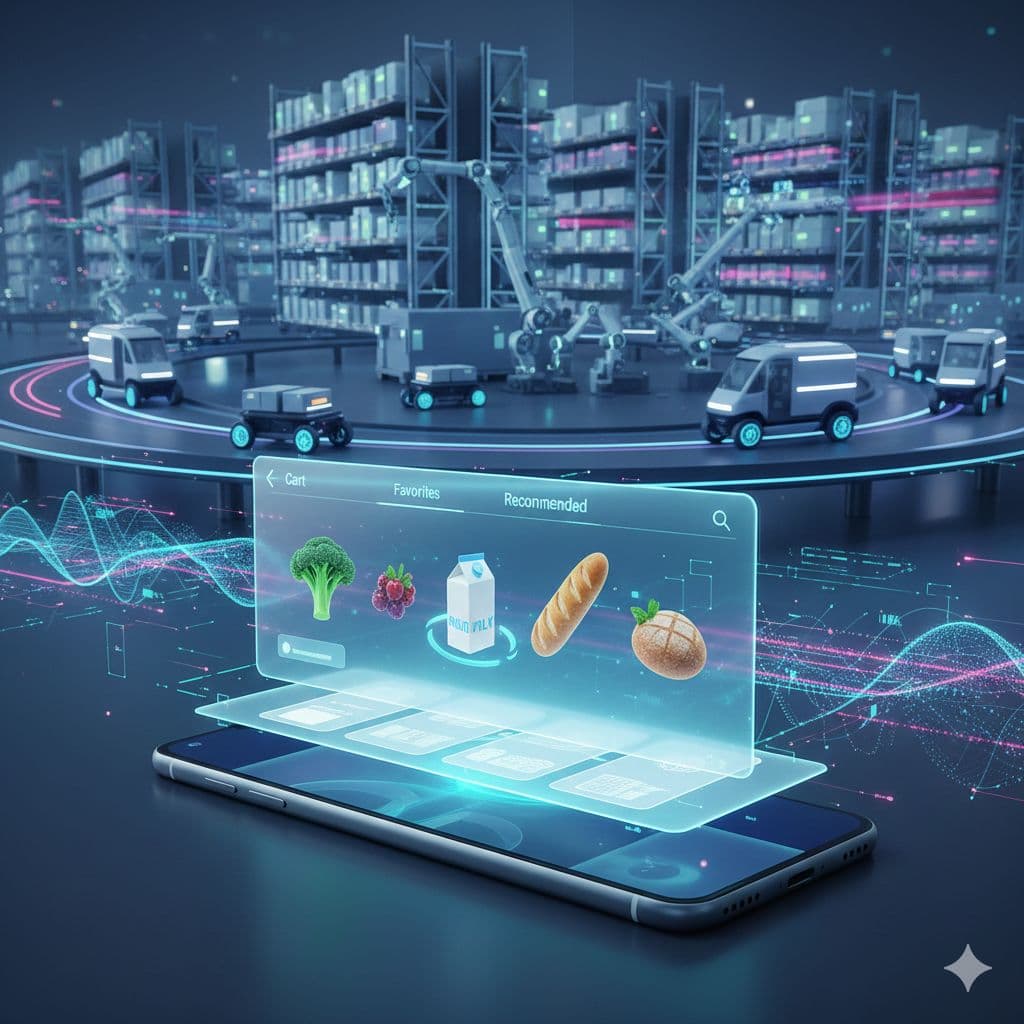
Introduction: The Hidden World Behind Your Weekly ShopWe’ve all been there: tapping a few buttons on a smartphone to order a week's worth of groceries or a last-minute dinner. The process feels seamless, almost trivial. You browse, you tap, you pay, and within an hour, a bag of perfectly ripe avocados or a hot pizza arrives at your door. The app on your screen seems like a simple digital storefront, a convenient menu brought to life.But that simplicity is an illusion. Beneath that clean user interface lies a ruthless technological battleground. In the high-frequency, low-margin world of grocery delivery, the difference between a brand that thrives and one that disappears is measured in milliseconds, driven by code that anticipates your habits, and powered by logistics that would impress a military strategist. This isn't just e-commerce; it's a war for retention fought with data and engineering.This article pulls back the curtain to reveal five of the most surprising technical and strategic truths that make modern grocery delivery possible. From the brutal economics of speed to the hidden complexity of selling a single chicken breast, you’ll discover that the app in your pocket is far more than a simple shopping cart—it's a marvel of modern technology.1. Speed Isn't a Feature; It's a 300% Conversion MultiplierIn e-commerce, speed is money. Research shows a one-second delay in page load time can slash conversions by 7%. But for grocery apps, the penalty for slowness—the "latency tax"—is catastrophic. Unlike buying a single pair of shoes, a grocery order involves adding dozens of items to a basket. On a mobile website, each tap can trigger a round-trip to a server, creating micro-delays that accumulate into massive user frustration and abandoned carts.This problem is magnified by the "impulse economy." Many orders are placed in "interstitial moments"—on a commute or between meetings—where cellular connectivity is unstable. A mobile website is fragile in these conditions; a dropped connection during checkout can kill the entire sale. A native app, however, is architecturally resilient. It stores its core UI components locally, making visual feedback instantaneous. More importantly, it uses an "optimistic UI," recording your actions to a local database and syncing with the server when a connection is restored. This ensures the impulse to buy is never lost to a network error.This architectural superiority isn't just a "nice-to-have" feature; it's a financial game-changer that directly impacts the bottom line.Native apps in the on-demand delivery sector can achieve conversion rates 307% higher than mobile websites.For any scaling grocery brand, this performance gap makes a native app an operational imperative. In a market defined by impulse and speed, it is the fundamental engine for converting momentary intent into revenue.2. Winning Grocery Apps Are Built for Habit, Not DiscoveryMost e-commerce is built for discovery—helping you find a new product. The grocery business model is the exact opposite. It's predicated on frequency and habit: the same milk, eggs, and bread you buy week after week. The primary strategic goal is to move a customer from the open, competitive world of web search into the "walled garden" of an app, transforming them into a loyal, high-frequency user.A native app is a "Retention Engine." Once installed, it’s optimized not for finding new things, but for effortlessly reordering old favorites. This is achieved through clever UI like a "Buy It Again" widget, which acts as a dynamic dashboard of the user's consumption habits. It leverages two powerful psychological shortcuts:• Visual Recognition: It displays images of past purchases, because users recognize product packaging far faster than they read text.• Predictive Ordering: It uses algorithms to anticipate needs. If you buy coffee every 14 days, on day 13 that coffee appears at the front of the list, making the app feel almost psychic.The financial impact of this shift is profound. By engineering habit, brands see a dramatic increase in Customer Lifetime Value (LTV).App users are the holy grail of retention, generating 3 to 5 times higher Lifetime Value compared to web-only shoppers.This isn't an accident. The data shows app users purchase approximately 33% more frequently and exhibit higher Average Order Values (AOV). By removing friction, the app becomes the default choice, locking out competitors and securing market dominance.3. The Most Powerful Marketing Messages Aren't Selling AnythingPush notifications give brands a direct, cost-effective marketing channel on a user's most personal device. But in the grocery vertical, the most effective notifications have nothing to do with sales or promotions. They are all about utility.While a "20% Off" alert might work for a fashion brand, a grocery app wins by providing timely, helpful information that builds trust and simplifies the user's life. The best notifications are transactional, personal, and predictive.• Transactional: "Your driver is 5 minutes away."• Personalized Inventory: "The organic avocados you like are back in stock."• Predictive Utility: "You bought milk 7 days ago. Need a refill?"What makes these alerts so powerful is the use of "Deep Linking," which takes the user from the notification directly to a pre-loaded cart or a specific product page. This reduces the path-to-purchase to a single, frictionless tap. This strategy of helpfulness over hype pays enormous dividends in the war for retention.Users who opt-in to push notifications show retention rates 3x to 10x higher than those who opt-out.4. The Surprising Complexity of Selling a Chicken BreastHere is a problem that perfectly illustrates why generic e-commerce software fails in the grocery industry: selling fresh food by weight. Imagine you order "1 kg of Chicken Breast." The warehouse picker finds a pre-packaged tray, but it weighs 1.05 kg. This is the "Catch Weight" problem.Most standard SaaS platforms are built to sell fixed units, not variable ones. They cannot handle the logic of charging a customer for a slightly different weight—and therefore a slightly different price—than what they originally put in their cart. This inability leads to one of two disastrous business outcomes: revenue leakage (by under-charging) or significant customer friction (by issuing constant, tiny refunds).A custom-built grocery app solves this elegantly. During checkout, it places a pre-authorization on the customer's card for an estimated amount. Later, when the picker scans the item's actual weight, the system communicates with the payment gateway to capture the exact final amount. This single function is an absolute necessity for protecting the razor-thin margins of the grocery vertical and demonstrates why a one-size-fits-all solution is never the right fit.5. Your "Smooth" Delivery Map Is a Deliberate Engineering FeatWe now expect a smooth, "Uber-style" map showing our driver's little car icon gliding seamlessly toward our location. This premium experience feels standard, but the technology is anything but. The jumpy, teleporting icon seen on many mobile websites is the result of an inferior approach called "polling," where the site repeatedly asks a server, "Where is the driver now?"Top-tier native apps use a superior technology called WebSockets. This opens a persistent, two-way communication channel, allowing the server to "push" location updates to the app the instant they happen. But this is only half the magic. The app then uses native animation libraries to interpolate the movement of the icon between data points, creating the smooth, gliding effect we associate with a premium service.Beyond a smooth map, native apps also leverage the phone's OS-level geofencing. This triggers automated, "magical" alerts like "Prepare for Arrival" when a driver crosses a virtual perimeter. This small feature has a huge operational impact, reducing driver wait times and customer anxiety. This experience isn't a vanity feature; it's a crucial engineering feat for building the trust and efficiency required to win the last mile.Conclusion: More Than Just a Shopping CartThe grocery and food delivery apps we use every day are not the simple digital storefronts they appear to be. They are highly sophisticated logistical and behavioral engines, meticulously engineered to reduce friction, build habits, and earn trust.From the raw economics of speed that dictate architecture, to the deep psychology of habit that shapes the user experience, these platforms are triumphs of specialized technology. They solve unique, industry-specific problems—like the variable weight of fresh food—that generic software simply can't handle. Every element, from the predictive push notification that reminds you to buy milk to the smooth glide of a driver's icon, is a deliberate choice designed to make a complex operation feel effortless.The next time you tap to reorder your weekly essentials, what other hidden layers of technology are you holding in the palm of your hand?

The Secret Psychology Behind Your Pet's Shopping App: 4 Strategies Brands Use to Win Your Loyalty
Introduction: From Store Aisle to Smart AppRemember the weekly chore of lugging a giant bag of pet food home from the store? For millions, that routine has been replaced by a few taps on a smartphone. The rise of e-commerce has transformed how we shop for our pets, and specialized mobile apps are at the forefront of this revolution. The global pet care market is booming, but this growth isn't just a business trend—it's a reflection of a deep, psychological shift in how we view our animal companions.Beneath the surface of these convenient apps lies a sophisticated strategy designed to build a powerful, direct relationship with you. This article reveals four of the most surprising and impactful strategies that these apps use to win our loyalty and fundamentally change the way we care for our furry family members.1. The Multi-Billion Dollar Shift: It's Not Pet "Ownership," It's "Parenting"The single biggest economic driver of the modern pet care industry is the concept of "pet humanization." This has moved far beyond a simple marketing buzzword; it's a fundamental shift in our collective mindset. We no longer just "own" pets; we are "pet parents."This shift has created a massive market for premium products, with categories like high-end food, healthcare, and supplements projected to grow at a compound annual growth rate (CAGR) of 12.8%. The most visible evidence of this is the rapid expansion of the fresh and frozen pet food market, where brands like The Farmer's Dog have disrupted the industry with direct-to-consumer subscription models.This psychological change is critical because "Pet Parents" behave differently than traditional owners. They demand transparency in ingredients, seek personalized solutions, and demonstrate what economists call "price inelasticity"—meaning their demand for a product doesn't change significantly even when the price increases, so long as they perceive it contributes to their pet's health and happiness. This creates the perfect environment for specialized, high-touch mobile apps to thrive.2. The Great Divide: Why an App User Is Worth Up to 5x More Than a Web UserFrom a unit economics perspective, the most critical finding in e-commerce is the staggering difference in value between a customer who uses a brand's app and one who only shops on its mobile website. For pet care brands, the app is not just another sales channel; it's the primary engine for building long-term value.The performance metrics speak for themselves. Compared to a mobile web user, a native app user is dramatically more valuable:• Lifetime Value (LTV): 3-5x higher on the native app.• Conversion Rate: 300% higher (6-8% on the app vs. ~2% on the web).• 90-Day Retention: 60% higher on the app.These numbers are a direct result of user behavior. App users view more than double the number of products per session (14 vs. 6 on the web), leading to more opportunities for discovery and purchase. This data highlights a core strategic insight:The mobile web, optimized for search and discovery, has proven to be a "leaky bucket" for long-term loyalty.Downloading an app is a clear signal of high intent. Once installed, the brand’s icon lives on the user's home screen—a constant, low-friction reminder that makes re-ordering almost effortless. The web is for finding a brand; the app is for living with it.3. The "Cooper" Effect: How Your Pet's Profile Creates an Emotional Lock-InHave you ever noticed how a pet app immediately asks you to create a detailed profile for your furry friend? This is a deliberate strategy rooted in a behavioral economics principle called the "Endowment Effect"—the idea that we place a higher value on things we've helped create.By prompting you to enter your pet's name, breed, birthday, allergies, and even upload a photo, these apps leverage this psychological hook to create a powerful emotional connection. The app is no longer just a store; it’s a personalized hub for your pet's well-being.When a user uploads a photo of their Golden Retriever, "Cooper," and inputs his birthday, the app ceases to be a store; it becomes Cooper's app. This emotional investment creates a high barrier to exit. Deleting the app feels like deleting Cooper's data.This strategy reframes the entire experience. When the app recommends "Senior Dog Joint Chews" for your 9-year-old dog, it feels like personalized, proactive care. This turns the brand's marketing apparatus into a perceived wellness service, building a defensive moat of trust that competitors on a generic marketplace cannot replicate.4. The End of "Oops, I Ran Out": Solving Churn with Smarter SubscriptionsFor subscription-based businesses, customer cancellation—or "churn"—is the biggest threat. Surprisingly, customers often cancel for mundane, "passive" reasons: they have too much product stockpiled, a credit card expired, or a delivery is inconveniently timed.Modern native apps solve these problems with defensive features like large, one-tap "Skip Shipment" and "Ship Now" buttons, removing the friction that leads to cancellation. But their true genius lies in how they turn defense into offense. The data collected in the "Cooper Effect" isn't just for emotional connection; it's the engine for logistical precision. Using a simple calculation—(Bag Weight) / (Daily Consumption based on Pet Weight) = Days to Empty—the app can predict exactly when you'll run out of food. This powers "Predictive Replenishment," turning a generic reminder into a helpful utility: "Cooper has about 3 days of food left. Tap here to ship his next bag today."This proactive management is then paired with the single biggest driver of revenue expansion: the "Add-to-Box" Carousel. Just before a scheduled shipment, the app presents a curated list of high-margin items like treats and toys. With a single tap, a user can add them to the upcoming box without paying extra for shipping. This combination of proactive service and frictionless upselling not only prevents churn but dramatically increases each customer's average order value.Conclusion: Your Phone Isn't Just a Store, It's a RelationshipThe battle for the modern pet care market is no longer being fought over price or product alone; it's being fought over who can build the most direct and meaningful relationship with the customer. The strategies embedded in these apps are designed to move beyond simple transactions and foster a sense of partnership in the well-being of our pets. By personalizing the experience, reducing friction, and providing genuine utility, brands are turning their apps into indispensable tools for the modern pet parent.Ultimately, the strategic difference is best captured by a key insight from retention analysis:The mobile web is a transactional medium; it is where people buy. The native mobile app is a relational medium; it is where people live.The next time an app asks you to build a profile for your pet, will you see it as just a form to fill out, or as the first step in a carefully designed relationship?