Brand Image
12/5/2025

4 Surprising Reasons Fashion Brands Are Ditching Websites for Mobile Apps

#Mobile Commerce#Fashion Technology
4 Surprising Reasons Fashion Brands Are Ditching Websites for Mobile Apps

Introduction: The Hidden Logic Behind "Download Our App"


If you’ve ever shopped for clothes online, you know the cycle. You find the perfect item, add it to your cart, and then hesitate. Will it actually fit? Will the color look the same in person? This uncertainty often leads to buying multiple sizes—a practice known as "bracketing"—with the full intention of returning whatever doesn't work. On the other end of the spectrum is the chaos of a limited-edition "drop," where a coveted item sells out in seconds, often leaving you with nothing but a crashed website and a sense of frustration.

Faced with these scenarios, you've undoubtedly seen the persistent banner: "For a better experience, download our app." It’s easy to dismiss this as just another marketing push, a brand's attempt to secure a permanent spot on your home screen. But this prompt is far more than an advertisement; it's a strategic response to the brutal new economics of e-commerce, where razor-thin margins and the high cost of returns are forcing brands to rethink everything.

This article pulls back the curtain to reveal the hidden logic behind the industry's pivot to mobile. Here are four surprising, behind-the-scenes reasons why native mobile apps are becoming the new flagship stores for modern fashion brands.


1. They're Building a Virtual Dressing Room to End the Guesswork


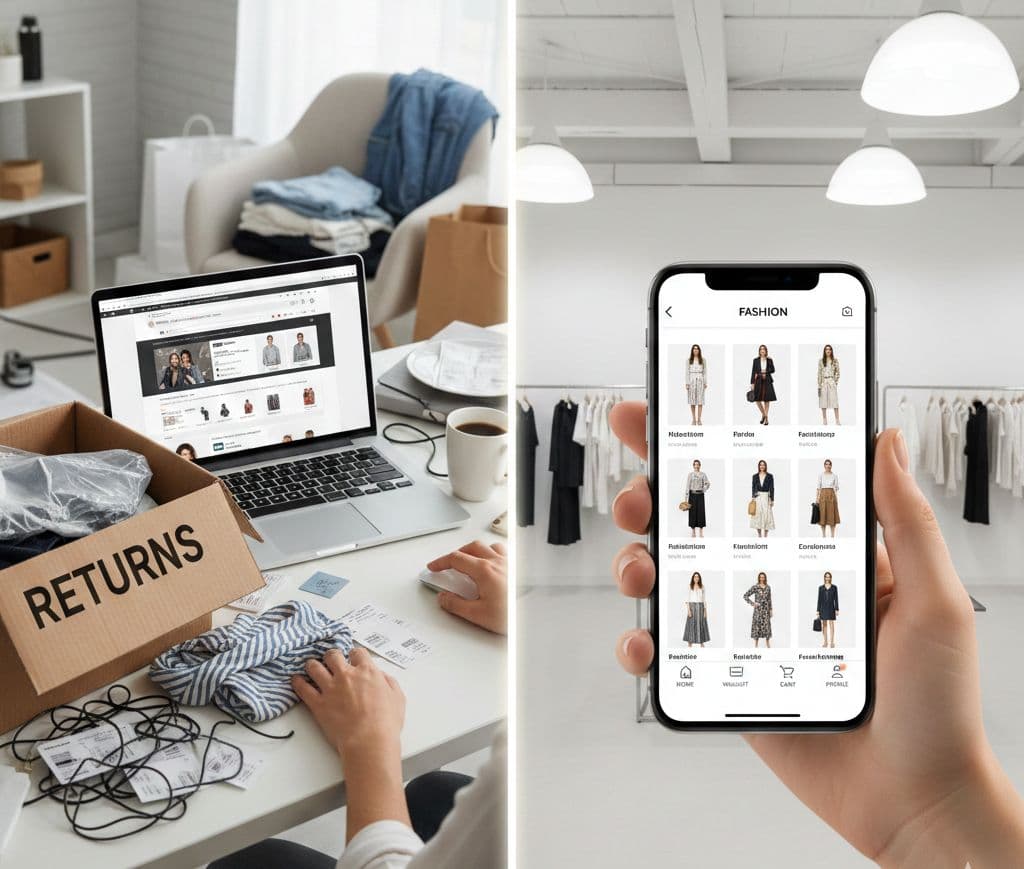
The fashion industry has a costly secret: online apparel return rates hover between a staggering 30% and 40%. This is a massive drain on profitability, especially when compared to the 8-10% return rate for brick-and-mortar stores. The core of the problem is the "verification gap"—the chasm between the digital representation of a garment and its physical reality. Fit issues alone are responsible for 38% of all returns.

Native mobile apps offer a powerful solution by transforming your phone into a virtual dressing room. By leveraging a phone’s advanced hardware, like its GPU and LiDAR sensors, brands can deliver high-fidelity Augmented Reality (AR) and Virtual Try-On (VTO) experiences. This technology allows you to see how a garment drapes and scales on your own body in real time, delivering experiences that are simply not possible on the mobile web, which often suffers from the latency and poor tracking stability of browser-based AR.

The impact is dramatic. Retailers who implement high-fidelity AR have seen their return rates decrease by up to 40%. This technology directly addresses the concerns of the nearly 47% of consumers who dislike online shopping precisely because they can't physically examine products. It moves the experience from a game of expensive guesswork to one of confident, informed purchasing.


2. They're Engineering a ‘Velvet Rope’ for Hyped Product Drops


You've probably heard of "Drop Culture," the marketing phenomenon where brands release limited-quantity products at a specific time to generate immense demand. This strategy, sometimes called the "SNKRS Effect," can sell out an entire product line in minutes. But for every successful drop, there are countless technical failures. The sudden, massive influx of users—a "thundering herd" traffic pattern—overwhelms standard e-commerce websites and shared app platforms. These platforms are architected for steady traffic, not the vertical spikes of a drop, leading to API throttling and database locks that cause crashes.

Custom native apps provide an elegant solution to this chaos: the Virtual Waiting Room. Think of it as a digital "velvet rope." Instead of showing users a crash screen when traffic surges, the app places them in an orderly, branded queue. It provides feedback like your position in line and estimated wait time, turning a potential technical disaster into a fair, organized, and even exclusive-feeling event.

"A crashed app during a hype event can alienate a brand's most loyal superfans, damaging the very brand equity the drop was meant to build."

Furthermore, native apps offer superior bot mitigation. Using device-level verification, they can ensure that limited-edition products go to real fans, not to automated reseller scripts that plague web-based drops.


3. They're Turning a 10-Minute Checkout into a 1-Second Tap


The final hurdle in any online purchase is the checkout, and on the mobile web, it acts as a friction multiplier that kills the very impulse to buy. The average cart abandonment rate for fashion on mobile devices is an astonishing 84.6%. The reasons are frustratingly familiar: 26% of users drop off due to a long or complex checkout process, and another 34% leave when forced to create an account.

Native apps solve this by fundamentally changing the interaction from tedious "data entry" to simple "identity verification." While a mobile website forces you to manually type in your name, address, and credit card details, a native app can seamlessly integrate with digital wallets like Apple Pay. This creates an "Instant Checkout" experience powered by biometric authentication like FaceID or TouchID.

The results are profound. Brands that integrate these features see conversion rate increases of up to 58%. By reducing the entire payment process to a single, secure tap, apps are perfectly designed to capture the impulse-driven purchases that define so much of modern fashion commerce.

Beyond the transaction itself, apps provide an "always-on" state. Unlike mobile websites that rely on temporary cookies and force users to log in repeatedly, a native app keeps the customer perpetually logged in, ensuring their cart and preferences are always just a tap away, perfectly capturing the micro-moments of impulse shopping.


4. They're Not Just Selling Clothes; They're Building a Community


In today's competitive market, a single transaction is no longer the primary goal. Brands are focused on Customer Lifetime Value (LTV)—the total revenue a customer will generate over time. This is where apps deliver their most significant and lasting advantage.

The financial argument is compelling. App users generate 2.8x to 5x higher lifetime value than web-only shoppers and purchase 33% more often. This happens because an app is an "owned channel." Once installed, the brand has secured permanent real estate on the user's home screen, allowing for direct communication that bypasses the need to constantly pay Google or Meta to re-acquire that user's attention.

The primary tool for this is the push notification, which bypasses cluttered email inboxes with their ~20% open rates and commands immediate attention on a user's lock screen. With the ability to increase user retention rates by up to 190%, targeted alerts about new arrivals, sales, or back-in-stock items are incredibly effective. Beyond notifications, brands are using apps to build communities through gamification and exclusive content—a strategy sometimes called the "Shein Effect." This drives deep engagement, reflected in the fact that users spend 7x more time in mobile apps than on mobile websites.

--------------------------------------------------------------------------------


Conclusion: Your Phone Isn't Just a Store, It's the New Flagship


A fashion brand's mobile app is far more than a miniature version of its website. It is a sophisticated, purpose-built tool designed to solve the biggest challenges in digital commerce. It's a virtual dressing room that slashes returns, a VIP entrance that manages hype, a one-tap checkout that eliminates friction, and a private club that builds lasting loyalty.

In an industry where customer acquisition costs are soaring and returns can erase profits, these four strategies are not just about creating a better experience—they are about building a more resilient and profitable business model.

The next time a brand prompts you to download its app, you'll know it's not just an invitation to shop. It's an invitation to a purpose-built world. The only question is, will you step inside?

4 Surprising Reasons Fashion Brands Are Ditching Websites for Mobile Apps